Hotel Dental Kits and Shaving Kits: Specifications, Packaging and MOQ Explained
Dental and shaving kits are the two items guests ask the front desk for most often, and the two where a 2-cent saving is most visible. Specification discipline here is worth more than negotiation.
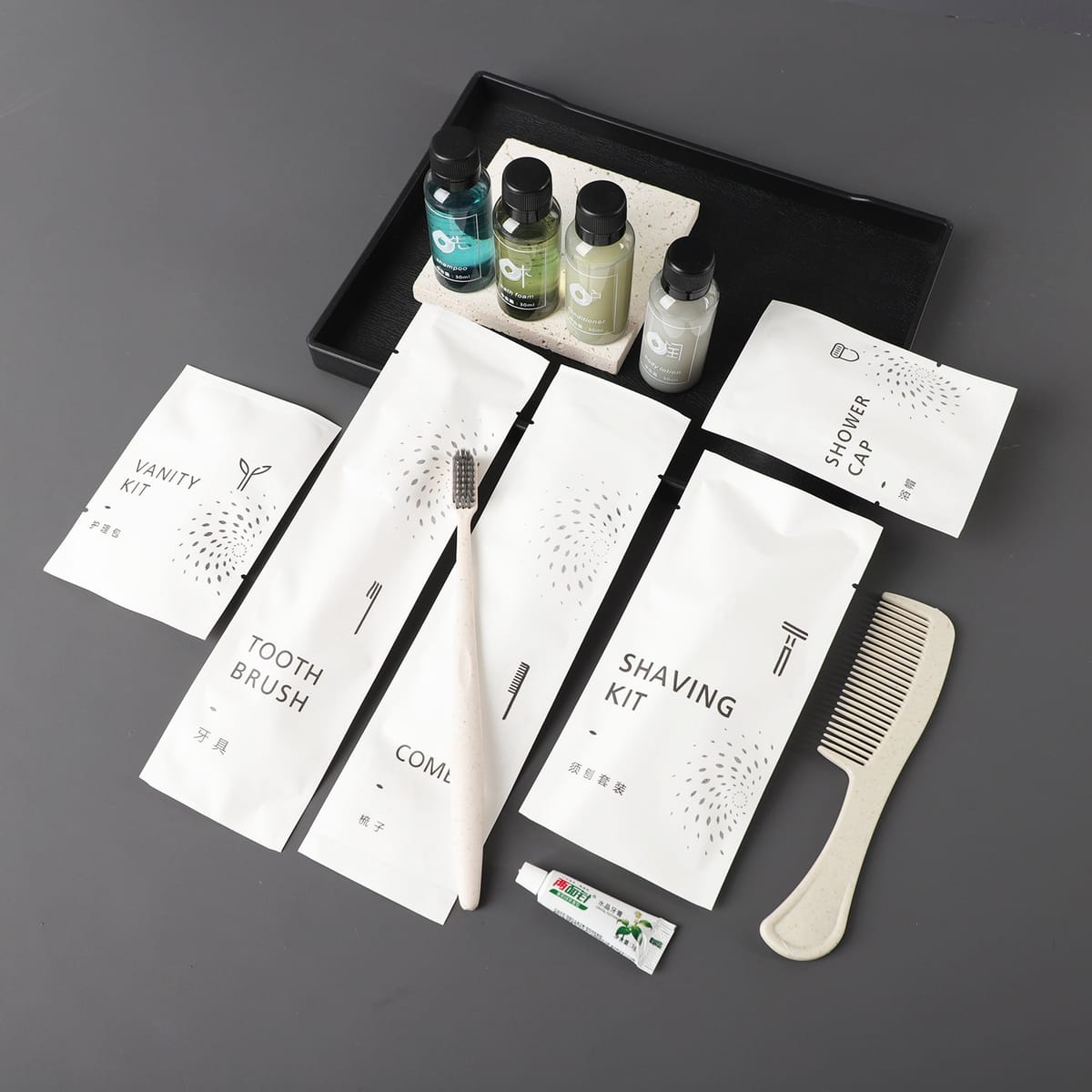
A dental kit looks trivial: a brush, a sachet of paste and a bag. In practice it carries more specification decisions than any other amenity — bristle stiffness, handle material, paste fill volume, sachet barrier, pouch format and print. Get them wrong and the kit reads cheap in the guest's hand; get them right and it costs almost nothing more.
1. Dental kit contents and specifications
| Component | Options | Typical 4-star spec |
|---|---|---|
| Toothbrush handle | PS, PP, wheat straw, bamboo | PP or wheat straw, 18-19cm |
| Bristle | Nylon 6.10 / DuPont filament, soft or medium | Soft, 0.15-0.20mm filament |
| Bristle count | Standard / dense | Dense, 4 rows |
| Toothpaste | 5g, 10g, 15g, 20g, 25g sachet or tube | 10g sachet, mint |
| Paste formulation | Standard, fluoride, whitening, sensitive | Fluoride, mint |
| Extras | Dental floss, tongue cleaner, mouthwash | Optional by room tier |
Fill volume is the first thing to fix and the first thing that gets quietly reduced in a cheaper quote. A 5g sachet is one brushing; a 10g sachet covers two. If your average length of stay is above two nights, 10g is the sensible floor — otherwise housekeeping ends up restocking on day two, which costs more than the paste.
2. Shaving kit contents and specifications
| Component | Options | Typical 4-star spec |
|---|---|---|
| Razor | Single blade, twin blade, triple blade | Twin blade, fixed head |
| Handle | PS, PP, wheat straw | PP, 11-12cm |
| Shave cream / gel | 5g, 10g, 15g sachet or tube | 10g sachet |
| Extras | After-shave lotion, razor cover | Cover included |
Blade count is the main quality signal. A single-blade disposable is functionally a one-use item and will nick; twin blade is the industry standard for 4-star, and triple blade belongs in suites or premium programmes. Also confirm the razor is wrapped or capped — an exposed blade in a pouch is a safety complaint waiting to happen.
3. Packaging formats and what each says to the guest
- Transparent OPP bag — cheapest, functional, reads economy. Good for back-of-house or 3-star.
- Printed non-woven pouch — the 4-star default; soft, quiet in the hand, accepts a clean one-colour logo.
- Kraft paper pouch — sustainability positioning, pairs well with wheat straw or bamboo accessories.
- Rigid or folding board box — premium and suite-level; highest cost and highest perceived value.
- Foil or metallised pouch — used for high-shine premium programmes; check the barrier layers if you intend to claim recyclability.
One practical detail: choose a pouch with a printed back panel for ingredients and batch coding. Regulations on cosmetic labelling apply to hotel amenities in most markets, and a pouch with no space for text forces either a separate label or an unlabelled product — both of which cause problems at customs or in an audit.
4. Labelling and documentation
For the paste, cream and any gel, expect to provide or approve: product name, net content, ingredient list (INCI), batch number, production and expiry date, and manufacturer identification. Ask your supplier for the MSDS and a recent third-party test report for the specific formulation — you will need both if the goods are inspected or if a hotel group's procurement team asks.
5. MOQ, lead time and price logic
Standard custom MOQ is 5,000 sets per design, with 5-7 days for a printed sample and 20-25 days for mass production. Below 5,000 the setup costs dominate: pouch printing, paste filling runs and carton printing are all amortised over fewer units.
The cheapest kit in a quote is almost always the one with a smaller paste fill, a single-blade razor and an unprinted OPP bag. That is a legitimate product — just make sure it is the one you intended to buy, and that your quote comparison is line by line.
6. Incoming QC checklist
- 1Count per carton against the packing list, and weigh one carton — a light carton means missing units.
- 2Check paste expiry: at least 18 months remaining on arrival is a reasonable standard for a hotel programme.
- 3Verify bristle stiffness on a sample of ten brushes; inconsistent tufting shows up immediately.
- 4Open five pouches and confirm the print position and colour against the approved sample.
- 5Test the razor cap retention — it should not fall off when the pouch is shaken.
- 6Confirm batch code is legible and matches the carton marking.
Our current kit programmes include the MORNING series non-woven kit, the white paper pouch kit and the transparent OPP economy kit, which cover the three price tiers described above. For a specification review against your current kit, send us a sample request.
Frequently Asked Questions
What toothpaste volume should a hotel provide?+
10g per guest is the practical standard for stays of two nights or more; 5g is sufficient for single-night stays but usually means a restock on longer stays.
What is the MOQ for custom-printed dental kits?+
5,000 sets per design, with 5-7 days for samples and 20-25 days for production after artwork approval.
Need this specification quoted for your property?
Send your room count, star rating and target unit price. We reply with a costed specification, not a catalogue page — usually within 12 hours.
Continue reading
Buying Guides
Hotel Slippers Wholesale: The Complete Buying Guide for Hotels and Distributors
How to specify hotel slippers wholesale: closed vs open toe, coral fleece and linen, sole thickness, MOQ, packaging and the sample checklist.
OEM & Customization
Custom Hotel Amenities With Your Logo: OEM Process, Artwork and Realistic Timelines
How hotel branding on amenities works: embroidery, silk screen, hot stamping, soap embossing, artwork files, proofing, MOQ and lead times.